Resilience: From Materials Science to Business Resilience
Just like the energy stored in the elastic region of a stress–strain curve, businesses can store energy against crises and recover without permanent damage. This page interprets organizational resilience based on a materials science perspective.
An Interdisciplinary View of the Concept of Resilience
Materials science explains energy storage and recovery behavior through concepts such as elastic limit, toughness and ductility. The same logic can be adapted to businesses’ response and recovery processes in the face of crises. This analogy makes organizational resilience more concrete and measurable.
Resilience in Materials Science
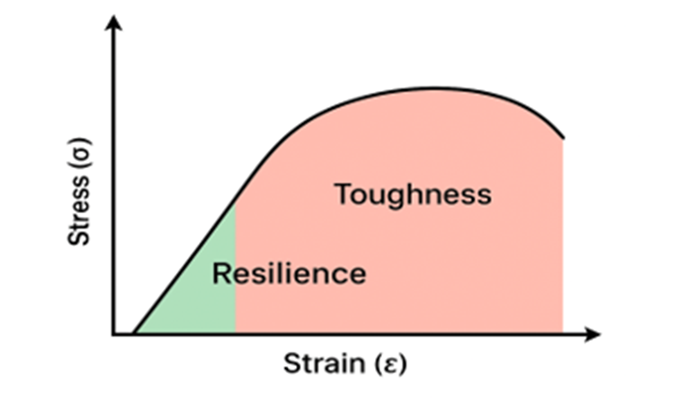
Materials store energy under external load. When the load is removed, the elastic portion of this energy is released and the material returns to its original form. Resilience is defined as the energy stored up to the elastic limit in the stress–strain diagram.
- Resilience: Energy stored up to the elastic limit
- Toughness: Total energy stored until fracture
- Ductility: Capacity for plastic deformation before fracture
Resilience in Business
For businesses, resilience means, in the face of unexpected crises and disruptions:
- Being able to survive
- Being able to adapt quickly
- Being able to sustain operations
- Being able to return to previous performance levels
- Even emerging stronger from the crisis
Just like a material that can return from the elastic region, businesses that can recover without permanent damage have high resilience.
Business Life Curve with the Stress–Strain Diagram
In the stress–strain diagram, the elastic region represents the safe zone where the material can return. Below this region, the material stores and releases energy; above it, permanent deformation begins.
From a business perspective:
- Elastic region: A business structure that can recover quickly despite shocks, and does not suffer permanent damage even if processes are disrupted.
- Yield point: The organization’s tolerance limits. Beyond this point, processes begin to be permanently damaged.
- Fracture: Loss of business continuity, permanent damage to reputation and financial structure.
Resilience-focused business design aims to keep the organization in the elastic region as much as possible and manage risks before approaching the yield point.
Mapping Material Properties to Organizational Resilience Characteristics
Resilience
Material: Energy stored up to the elastic limit.
Business: The ability to return without permanent damage even if performance drops during a crisis.
- Flexible processes and alternative scenarios
- Crisis plans that can be activated quickly
- Proactive risk management
Toughness
Material: Total energy stored until fracture.
Business: The ability to remain standing even in prolonged crises.
- Financial buffers and emergency funds
- Diversified revenue streams
- Long-term scenarios and stress tests
Ductility
Material: Capacity for plastic deformation before fracture.
Business: The ability to adapt by redesigning the business model and processes.
- Rapid transition to new business models
- Digitalization and automation capability
- Reskilling employees
Materials and Businesses with High Resilience
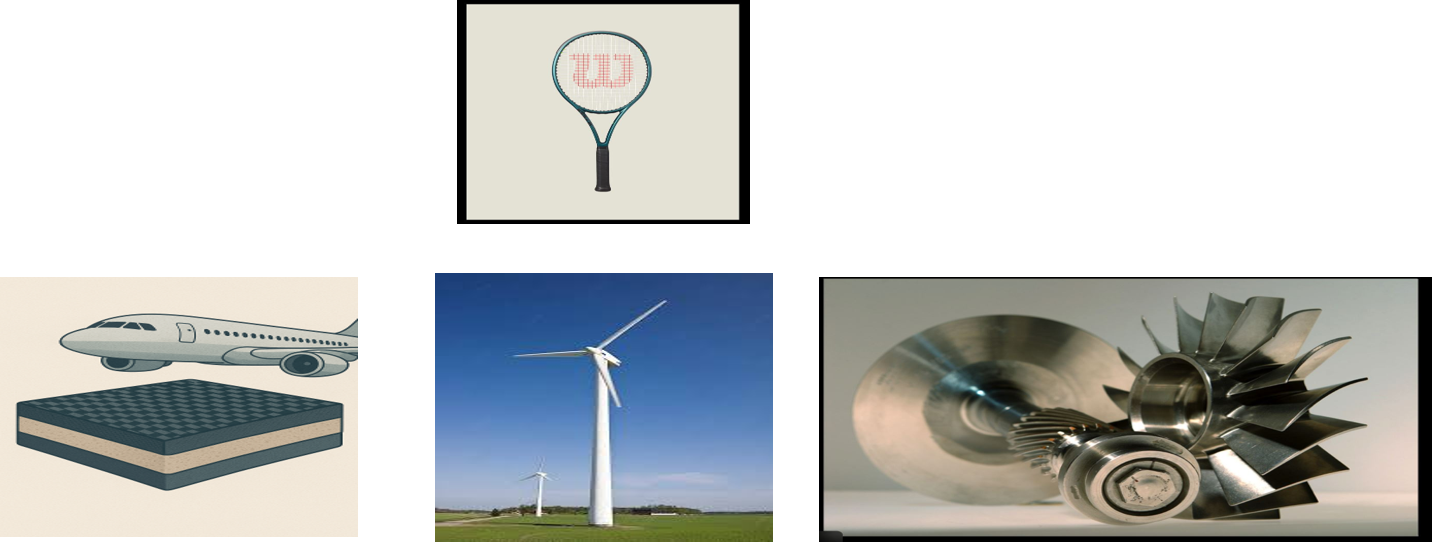
Spring steels, titanium alloys, composite materials and elastomers stand out with their high resilience capability.
Organizations with high resilience have the following characteristics:
- Backup plans and alternative suppliers for critical processes
- Financial flexibility and strong cash flow
- Digital backups and cyber resilience
- Policies that support employees during crises
Application Example: Spring Steel and Crisis Management
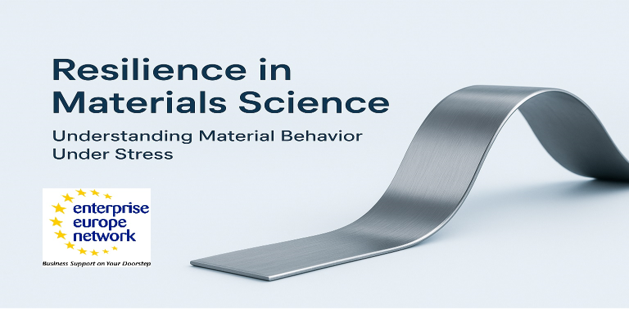
Springs are elements that can store maximum energy in the elastic region and release this energy when the load is removed.
A similar approach for SMEs:
- Predefined action plans to be used during crises
- A balanced energy approach between financial planning and supply management
- Learning from the crisis and opportunities to become stronger
Resilience, Sustainability and Preparedness for the Future
Resilience, as in materials, is a key indicator of safety, sustainability and competitiveness for businesses. As the EEN team, we are here to help SMEs and organizations become more flexible, better prepared and more resilient against crises.